
Precision Machined Spacers and Components for Medical Equipment
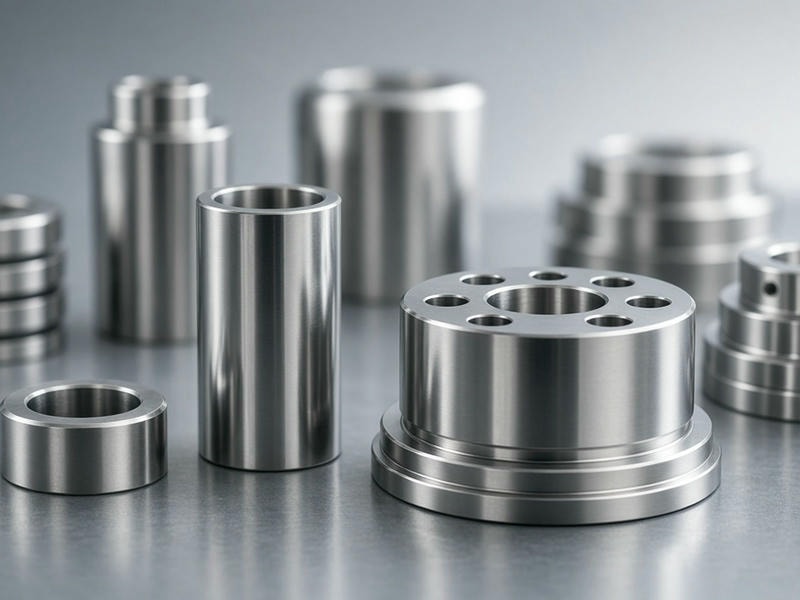
SpacerMFG produces custom CNC machined spacers and precision metal hardware built directly to print for medical equipment OEMs and contract manufacturers.
From prototype validation to ongoing production, our multi-axis CNC turning, milling, precision grinding, and controlled passivation support critical alignment, fluidic clearance, and surface purity requirements.
±0.005 mm
Turning tolerances available depending on material grade and structural rigidity.
2.0–150 mm
CNC turning range for outer diameters.
Ra 0.8 µm
Standard machined surface finish, with enhanced finishing available.
FAI
First-article inspection before complete production runs.
ASTM A967
Passivation standard referenced for stainless steel finishing.
Built for device reliability
Mechanical precision requirements in medical device hardware
Components inside medical devices must maintain dimensional stability and cleanliness through demanding operating and sterilization environments.
Zero-burr edges
Manual and automated deburring, supported by optical inspection, helps prevent loose fragments and sharp edge flash near sensors and fluid pathways.
Sterilization compatibility
316L stainless steel and hard-anodized aluminum help resist oxidation and pitting during repeated thermal and chemical exposure.
Controlled alignment
Face flatness, bore concentricity, parallelism, and perpendicularity support stable optical assemblies and fluid metering systems.
Component portfolio
Precision components engineered for medical equipment
Custom turned and milled parts are produced from customer-supplied CAD models, manufacturing prints, and material specifications.
| Component type | Common materials | Structural features and applications |
|---|---|---|
| Precision spacers | 316L stainless steel, titanium, 6061-T6 aluminum | Custom OD/ID tolerances to ±0.005 mm for optical lenses, PCB mounts, and structural plates. |
| Spacer sleeves | 304 / 316 stainless steel, brass, PEEK | Thin-wall wear sleeves for rotating shafts and inner alignment guides in drive motors. |
| Stepped and flanged spacers | Stainless steel, aluminum 7075 | Integrated shoulders provide axial positioning and positive mechanical stops in compact housings. |
| Threaded standoffs | Stainless steel, brass, aluminum | Male-female and female-female hex or round profiles for circuit boards and sensor modules. |
| Precision bushings | Bronze, 316L stainless steel, PTFE | Precision-reamed bores for low-friction pivots and shaft supports in actuation assemblies. |
| Custom shafts and pins | Titanium, 17-4 PH stainless steel | Micro-ground outer diameters for rigid linear guidance in laboratory automation equipment. |
Machining platform
CNC machining capabilities and dimensional specifications
High-precision CNC turning centers, multi-axis milling machines, and secondary grinding equipment are configured for repeatable production.
01
CNC turning
- OD / ID steps
- Internal and external threading
- Micro-grooves and retention chamfers
- Concentric bores and multi-step diameters
OD range: 2.0–150 mm
Tolerances down to ±0.005 mm depending on the material and geometry.
02
CNC milling
- Multi-axis pocketing
- Precise hole patterns and counterbores
- Side-tapping and slotting
- Complex 3D profiles
For structural and specialized parts
Suitable for brackets, alignment blocks, and manifold spacers.
03
Finishing operations
- Passivation and anodizing
- Precision grinding and lapping
- Micro-deburring and cleaning
- Surface verification
Surface finish
Standard machined finish down to Ra 0.8 µm; enhanced finishing to Ra 0.4 µm or better.
Material selection
Medical-grade materials and application suitability
Selecting the correct alloy or polymer helps maintain operational stability and prevent degradation in clinical environments.
Selection priorities
316L steel
Corrosion resistance and autoclave compatibility
Aluminum
Lightweight structural performance
Plastics
Insulation and chemical resistance
Stainless steel: 304, 316L, 17-4 PH
Best used for: Structural supports, fluid path components, autoclave-exposed assemblies, shafts, and retention pins.
Characteristics: 316L resists chloride-related pitting; 17-4 PH provides high tensile strength for load-bearing parts.
Aluminum: 6061-T6 and 7075-T6
Best used for: Weight-sensitive framing, portable imaging equipment, chassis standoffs, and heat sink spacers.
Characteristics: Strong strength-to-weight ratio; anodizing protects against oxidation and chemical contact.
Brass and copper alloys
Suitable for electrical grounding standoffs, RF shielding components, and low-friction bushing sleeves requiring electrical or thermal conductivity.
Engineering plastics
PEEK, Delrin / POM, and PTFE support electrically isolating spacers, fluidic guide bushings, and chemical delivery manifolds.
Beyond machining
Secondary operations, passivation, and finishing
Raw machined components can receive specialized treatment to improve corrosion resistance, wear performance, dimensional control, and cleanliness.
Citric and nitric passivation
Removes free iron and supports a passive chromium oxide layer in accordance with ASTM A967.
Type II and Type III anodizing
Creates a durable oxide layer, with hardcoat anodizing increasing wear resistance.
Grinding and lapping
Supports sub-micron dimensional control and smooth sealing surfaces.
Laser marking and cleaning
Adds part numbers and lot codes, followed by ultrasonic removal of oils, coolants, and fine particulates.
Documented quality
Quality control and inspection protocol
SpacerMFG verifies critical features against customer drawings across prototype lots and repeat production batches.
Incoming raw material and MTC verification
In-process machining and first-article optical inspection
Post-processing and passivation or anodizing checks
Final CMM and surface finish verification
Material traceability
Raw metal bar stock is sourced with chemical and physical Mill Test Certificates.
Dimensional verification
CMMs, optical profile projectors, air gauges, and micrometers verify bores, threads, squareness, and wall thickness.
Surface roughness testing
Contact profilometers confirm texture against drawing specifications.
Magnified burr inspection
Optical scopes inspect internal intersections, cross-holes, and chamfers for residual burrs.
Start your project
Request a quote for medical equipment components
Share your drawings and requirements. Our engineering team reviews manufacturability, finishing needs, and cost optimization for prototypes or production volumes.
Submission requirements
- •PDF drawings with tolerances, surface finish, and material grade
- •3D CAD files in STEP, IGES, or X_T format
- •Prototype quantity and projected annual volume
- •Required passivation, hard anodizing, laser marking, or other treatments
Email: info@spacermfg.com
Manufacturing facility:
Build your next medical equipment component with confidence.
Partner with SpacerMFG for precision turned and milled hardware engineered to your specifications.