
Defense machining and build-to-print manufacturing
Precision CNC Machined Spacers and Components for Defense Hardware
"SpacerMFG" manufactures custom precision spacers, sleeves, standoffs, bushings, and turned components to print for defense, aerospace, and tactical equipment assemblies.
Operating from a precision machining facility established in 2013, we deliver build-to-print metal and engineering plastic parts engineered for extreme environmental conditions, mechanical shock, and rigorous operational loads.
2013
Facility established
±0.005 mm
Tolerances up to
CMM
Quality verification
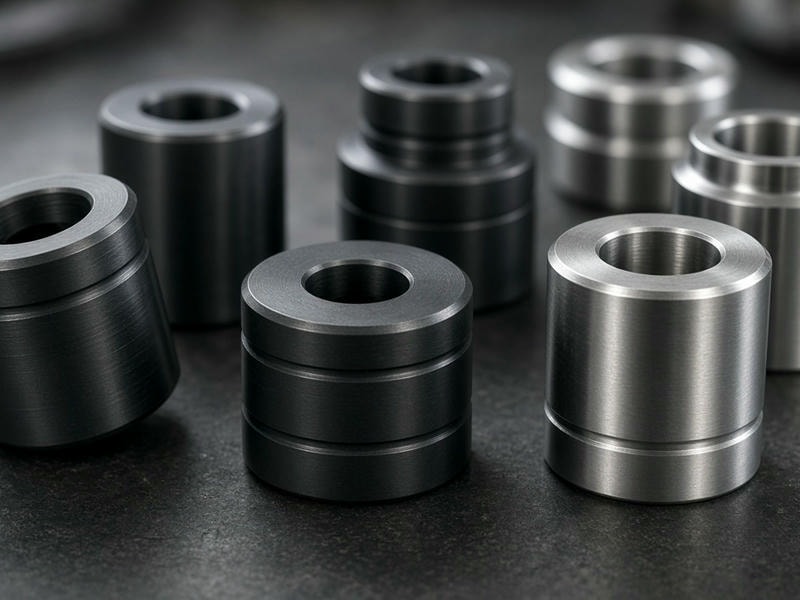
Built for demanding assemblies
Technical demands for defense-grade machined components
Defense hardware requires zero-defect mechanical positioning, accurate stack-up management, and predictable material performance. Out-of-tolerance spacers, thread galling, and material degradation under vibration are unacceptable in military ground vehicles, tactical optics, communications hardware, and aerospace sub-assemblies.
Custom geometry
Parts produced to drawings and CAD models for application-specific fit.
Tight tolerances
Drawing-dependent tolerances from ±0.005 mm to ±0.05 mm.
Certified alloys
Al 7075, 17-4PH, 316L, steels, non-ferrous metals, and polymers.
Verified finish
Surface treatments supported by inspection and material records.
Performance sequence
Design intent to verified part
01
Material selection
02
Machining and finishing
03
CMM and documentation
Manufacturing capability
CNC turning and milling for simple or complex geometries
Multi-axis CNC turning centers and CNC milling machinery process high-strength alloys and engineering polymers from client CAD models and engineering drawings.
CNC turning capabilities
| Parameter | Specification and range | Defense application context |
|---|---|---|
| Machining processes | Turning, boring, grooving, threading, parting | Sleeve spacers, solid shafts, stepped bushings |
| Diameter range | 1.0 mm to 300 mm | Electronic standoffs to structural spacer rings |
| Length capability | Up to 500 mm | Hinge pins, structural sleeves, long standoffs |
| Standard tolerances | ±0.005 mm to ±0.05 mm | Bearing alignment and low-clearance sleeves |
| Concentricity and runout | Down to 0.008 mm TIR | Rotating shafts and optical housing alignment |
| Surface finish | Ra 0.4 µm to Ra 3.2 µm | Sealing surfaces and sleeve interfaces |
CNC milling capabilities
| Feature | Production capability | Typical defense hardware |
|---|---|---|
| Axis configurations | 3-axis and 4-axis milling | Brackets, flanged spacers, notched housings |
| Complex geometries | Pockets, counterbores, keyways, off-center holes | Avionics mounts and optic retention plates |
| Threading | M1.6 to M30, UNC/UNF, Helicoil preparation | Threaded standoffs and panel fasteners |
| Edge finish | Deburring, chamfering, radius edge breaking | Reduced stress concentration points |
Component range
Standard and custom spacer configurations
We produce standard cylindrical forms and complex, multi-featured hardware engineered for specialized defense assemblies.
Precision spacers
Round, square, or hex profiles with controlled ID, OD, and length for accurate component separation.
Spacer sleeves
Thin- or heavy-walled tubes that protect bolts, absorb compression, or isolate rotating shafts.
Stepped spacers
Multiple outer diameters or internal steps locate components axially and provide mechanical stops.
Flanged spacers
Integrated flanges distribute clamping loads across mounting brackets and enclosure walls.
Threaded spacers and standoffs
Male-female, female-female, and self-retaining configurations for PCB isolation and chassis mounting.
Precision bushings
Hardened ground sleeves for high-wear hinge points, mechanical linkages, and pivot joints.
Material engineering
Material options for defense machining
Selecting the proper alloy balances mechanical strength, component weight, thermal expansion, and environmental endurance.
Aluminum alloys
7075-T6: exceptional strength-to-weight ratio for aerospace and tactical gear. 6061-T6: versatile, corrosion-resistant, machinable, and suitable for anodizing.
Stainless steel alloys
17-4 PH: high yield strength and corrosion resistance. 316/316L: chloride and marine resistance. 303/304: general-purpose corrosion protection.
Alloy and carbon steels
4140/4340: hardened steel for impact and structural loads. 12L14/1018: cost-effective grades for non-corrosive environments or secondary plating.
Non-ferrous and polymers
C36000 brass: conductive and non-sparking. PEEK, Delrin/POM, and PTFE: lightweight, non-conductive, chemical-resistant, or low-friction options.
Ready for integration
Secondary processing and surface finishing
Integrated secondary operations protect parts against salt spray, atmospheric corrosion, galvanic action, and mechanical wear.
| Finish process | Standard or specification | Primary function |
|---|---|---|
| Hardcoat anodizing Type III | MIL-A-8625, Type III, Class 1/2 | Wear-resistant ceramic aluminum oxide layer up to 50 µm. |
| Sulfuric anodizing Type II | MIL-A-8625, Type II | Corrosion protection and color coding in black, clear, or OD green. |
| Passivation | ASTM A967 / AMS 2700 | Removes free iron from stainless steel to maximize corrosion resistance. |
| Electroless nickel plating | MIL-C-26074 | Uniform nickel-phosphorus coverage over complex geometry and internal threads. |
| Zinc and nickel plating | ASTM B633 / ASTM B689 | Environmental oxidation protection for carbon steel components. |
| Black oxide | MIL-DTL-13924 | Non-reflective finish for optical housings and steel fasteners. |
| Precision grinding | Centerless / cylindrical | OD tolerances down to ±0.002 mm and surface finishes to Ra 0.2 µm. |
| Laser marking | Custom text and part IDs | Permanent CAGE codes, part numbers, lot numbers, and serial codes. |
Quality assurance
Quality control and engineering compliance
Verification procedures are maintained from raw material receiving through final dispatch inspection.
Inspection sequence
Raw material verification → first-article inspection → in-process quality checks → final CMM and finish audit
Material traceability
Mill test certificates are recorded to confirm chemical composition and physical properties match purchase specifications.
Dimensional inspection
CMMs, optical profile projectors, digital micrometers, bore gauges, and thread plug gauges support verification.
Controlled burr management
Deburring, microscopic inspection, mechanical tumbling, and edge breaking help prevent loose flash or metal slivers.
Custom packaging
Compartmentalized trays, vacuum packaging, or protective sleeves help prevent contact damage, rust, and contamination.
From prototype to production
Working with SpacerMFG
Whether you need low-volume prototype batches for testing or high-volume repeat production for active equipment contracts, our engineering team assists with manufacturability feedback, material selection, and production optimization.
Submit your project specifications
- 01. Engineering drawings: 2D prints in PDF, DXF, or DWG with dimensions, tolerances, and finish notes.
- 02. 3D models: STEP, IGES, or X_T files for programming and multi-axis milling evaluation.
- 03. Material requirements: Grade and temper such as Al 7075-T6 or SS 17-4PH H1150.
- 04. Order quantities: Prototype quantities, initial production batches, or annual scheduled releases.
Request a quote
Discuss your defense component requirements
Share your drawings, models, material requirements, quantities, and finishing specifications for a detailed technical quote and lead time estimate.