
Precision manufacturing for the global energy sector
Precision Machined Spacers & Turned Components for Energy Equipment
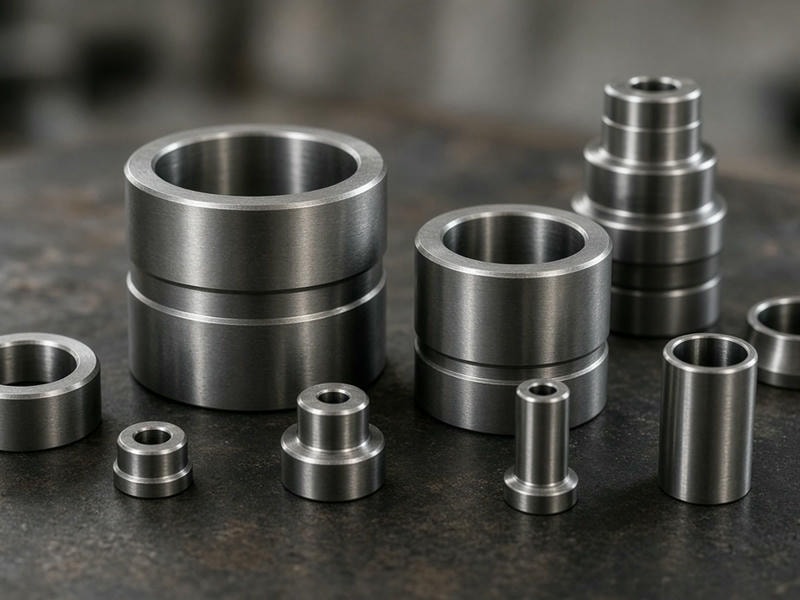
SpacerMFG manufactures custom metal and plastic spacers, sleeves, bushings, standoffs, and precision turned parts for renewable energy installations, power distribution systems, and industrial energy equipment.
Working directly from your CAD models and 2D engineering drawings, we produce production-ready hardware designed for demanding thermal, electrical, and mechanical environments.
±0.01 mm
Standard turning tolerance
1.0 mm
Minimum drilled ID
24 hours
Quote review target
Applications
BESS, solar tracking, power generation, transmission and switchgear
Production
Prototype quantities through 100,000+ piece production runs
Engineering requirements
Hardware built for harsh operating conditions
Components used in power generation, battery energy storage systems, solar tracking systems, and grid transmission infrastructure must maintain dimensional stability through vibration, environmental exposure, thermal cycles, and heavy mechanical loads.
Corrosion resistance
Marine-grade alloys or zinc, nickel, and anodized finishes help prevent galvanic coupling between dissimilar metals in outdoor structures.
Thermal stability
Strict height tolerances help spacers and mounting sleeves maintain performance near transformers, converters, and generator housings.
Electrical clearance
Controlled roughness, burr-free edges, and clean radii support creepage distances and help prevent arcing in switchgear and inverter cabinets.
Torque retention
Compression sleeves and stepped spacers are engineered to resist deformation under high bolt preload and preserve structural joint integrity.
CNC machining capabilities
From rapid prototypes to repeatable production
SpacerMFG operates a high-precision CNC turning and milling facility optimized for medium-to-high volume production runs as well as rapid prototyping of energy hardware.
CNC turning performance
High-concentricity production for cylindrical hardware
- Processes
- Single-spindle turning, multi-axis live tooling, Swiss-type turning, precision boring, grooving, threading
- Outside diameter
- 2.0 mm to 300.0 mm
- Inner diameter
- Down to 1.0 mm, drilled or reamed
- Tolerances
- ±0.01 mm standard; down to ±0.005 mm upon drawing review
- Surface finish
- Ra 0.8 µm standard; Ra 0.4 µm ground or polished
- Geometries
- Straight and stepped spacers, grooves, threads, chamfers, spherical radii
CNC milling performance
Complex features for prismatic and asymmetrical parts
- Processes
- 3-axis, 4-axis, and 5-axis vertical machining, contouring, face milling, pocketing, offset drilling
- Part dimensions
- Up to 600 mm × 400 mm × 300 mm
- Standard tolerances
- ±0.02 mm for milled features, keyways, and hole patterns
- Secondary features
- Off-center cross-holes, key slots, counterbores, mounting flats, laser marking
Process selection principle
Cylindrical parts with OD, ID, threads, or steps typically use CNC lathes or Swiss turning. Pockets, flanges, and slots are routed through 3-, 4-, or 5-axis milling.
Product matrix
Machined hardware for energy applications
We build components strictly to customer prints. Typical configurations support power generation, storage, distribution, and heavy energy equipment.
| Part category | Typical energy applications | Key technical characteristics |
|---|---|---|
| Busbar spacers & standoffs | Electrical distribution panels, power converters, battery racks | Copper, brass, or aluminum; high-conductivity or electrically isolated configurations |
| Solar tracker mounting sleeves | Single-axis solar trackers, panel mounting dampers | Heavy-wall steel or aluminum sleeves with corrosion-resistant plating |
| Wind turbine generator bushings | Pitch control, gearbox mountings, yaw drive assemblies | High-tensile stainless steel or bronze; reamed IDs for shaft alignment |
| BESS module spacers | Utility-scale battery rack enclosures, thermal management plates | Lightweight aluminum standoffs with tight length tolerance for even clamping pressure |
| Transformer & switchgear hardware | High-voltage substations, enclosures, breaker assemblies | Non-magnetic stainless steel or engineered plastics with chamfered edges |
| Turbine & pump shaft sleeves | Hydroelectric and steam power equipment | Precision-ground outer diameters and wear-resistant surface treatments |
Materials & finishing
Choose materials for the environment, load, and service life
Selecting the correct material and surface finish supports long-term field reliability without premature corrosion or wear.
Raw material options
- Aluminum: 6061-T6, 7075-T6, 2024-T3 for lightweight structures, heat sinks, and battery racks.
- Stainless steel: 304, 316L, 17-4 PH for marine solar farms, nacelles, and aggressive environments.
- Carbon and alloy steel: 12L14, 1045, 4140 for high-load sleeves and pin mountings.
- Copper and brass: C11000 ETP Copper and C36000 Brass for conductivity and grounding.
- Engineering plastics: POM, PEEK, PTFE, and Nylon for isolation, wear pads, and standoffs.
Surface protection & identification
- Anodizing: Type II or Type III hardcoat for aluminum oxidation protection and isolation options.
- Passivation: ASTM A967 treatment to maximize stainless steel corrosion resistance.
- Electroless nickel or zinc: Uniform coverage inside small bores and threads.
- Black oxide: Mild indoor corrosion protection and reduced light reflection.
- Laser marking: Permanent part numbers, serial codes, and batch identification.
Manufacturing strategy
Fit the process to your project
The right manufacturing route balances component cost, lead time, geometry, volume, and structural performance.
Review the drawing
Engineering drawings and CAD files define critical tolerances, materials, threads, finishes, and delivery requirements.
Match geometry to process
Bar-fed CNC lathes suit cylindrical parts. Multi-axis milling handles asymmetrical profiles, pockets, hole patterns, and multi-sided features.
Add precision operations
Grinding is recommended when pin or sleeve diameters require tolerances tighter than ±0.005 mm or finishes smoother than Ra 0.4 µm.
High-volume turned spacers
Fast cycle times, exceptional concentricity, and low unit costs for cylindrical spacers, standoffs, and sleeves.
Low-volume custom profiles
Flexible milling for asymmetrical brackets and complex busbar spacers with multi-sided features.
Prototype to production
Small-batch engineering prototypes from 10–50 pieces through full-scale production runs of 100,000+ pieces.
Quality assurance
Inspection and traceability at every stage
SpacerMFG implements rigorous quality management to ensure delivered components align with submitted drawings and specified standards.
Dimensional inspection
CMMs, optical comparators, digital micrometers, and thread plug gauges support dimensional verification.
Material traceability
Material test reports and mill certificates are maintained for incoming lots against ASTM, DIN, or ISO requirements.
First Article Inspection
FAI is available for prototype validation and initial production sign-off before full-scale manufacturing.
Surface roughness testing
Profilometer verification confirms sealing faces and bearing seats meet specified Ra limits.
Direct manufacturing advantage
A simpler technical path from drawing to delivered part
- Direct engineering supportSpeak directly with manufacturing technicians to optimize geometry for reduced machining time.
- Flexible order quantitiesSupport for engineering prototypes through full-scale production quantities.
- Strict drawing complianceChamfers, thread pitches, surface finishes, and other callouts are produced to specification.
- On-time deliveryStreamlined scheduling helps assembly lines and field installation teams stay on schedule.
Request a quote
Submit your energy component RFQ
Send your technical drawings to our team for a fast engineering review of custom spacers, sleeves, bushings, or turned hardware.
How to request a quote
- 1. Upload your files: Send 3D CAD files such as .STEP or .IGS together with 2D .PDF drawings showing critical tolerances, thread specifications, and surface finishes.
- 2. Specify project details: Include materials, surface treatments, quantity breaks, and delivery deadlines.
- 3. Receive your quote: Our engineering team will review geometry, verify manufacturing feasibility, and provide a competitive quotation within 24 hours.
Start your RFQ
Global shippingFactory address
Engineering & RFQ email
info@spacermfg.com
Fast turnaround · Strict drawing compliance · Global shipping
Website: SpacerMFG